

Home › Forum › Ask A Member › 1956 AD-10 Problems
- This topic has 8 replies, 7 voices, and was last updated 9 years, 2 months ago by
Don.
-
AuthorPosts
-
January 21, 2017 at 9:42 pm #6159
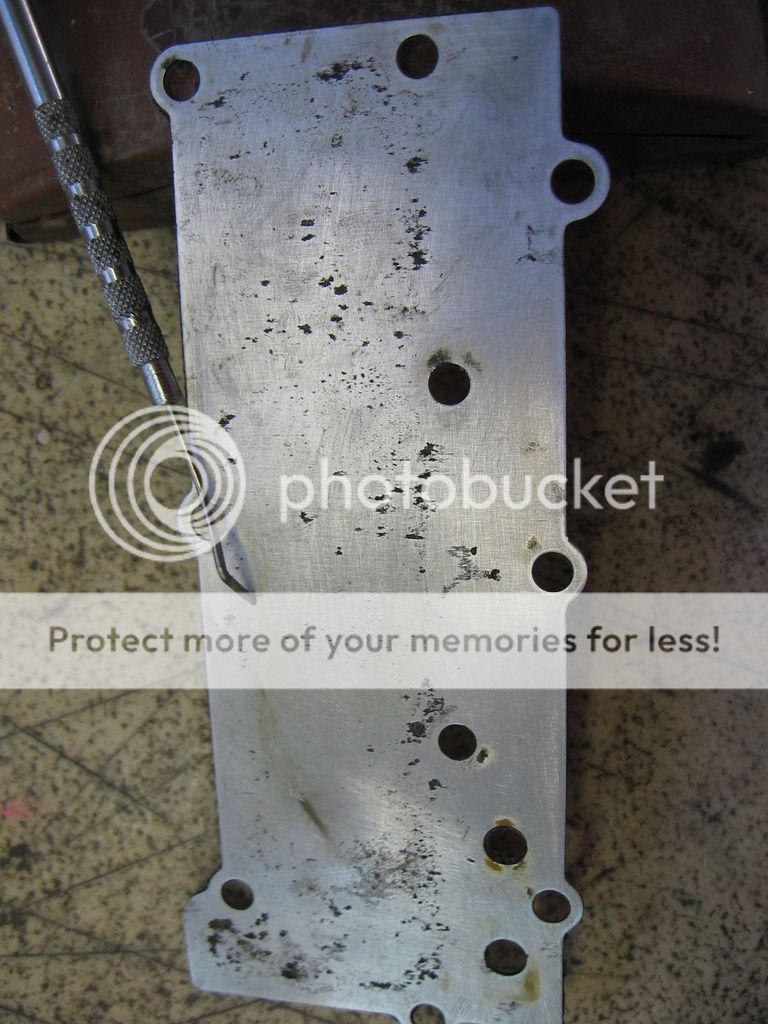
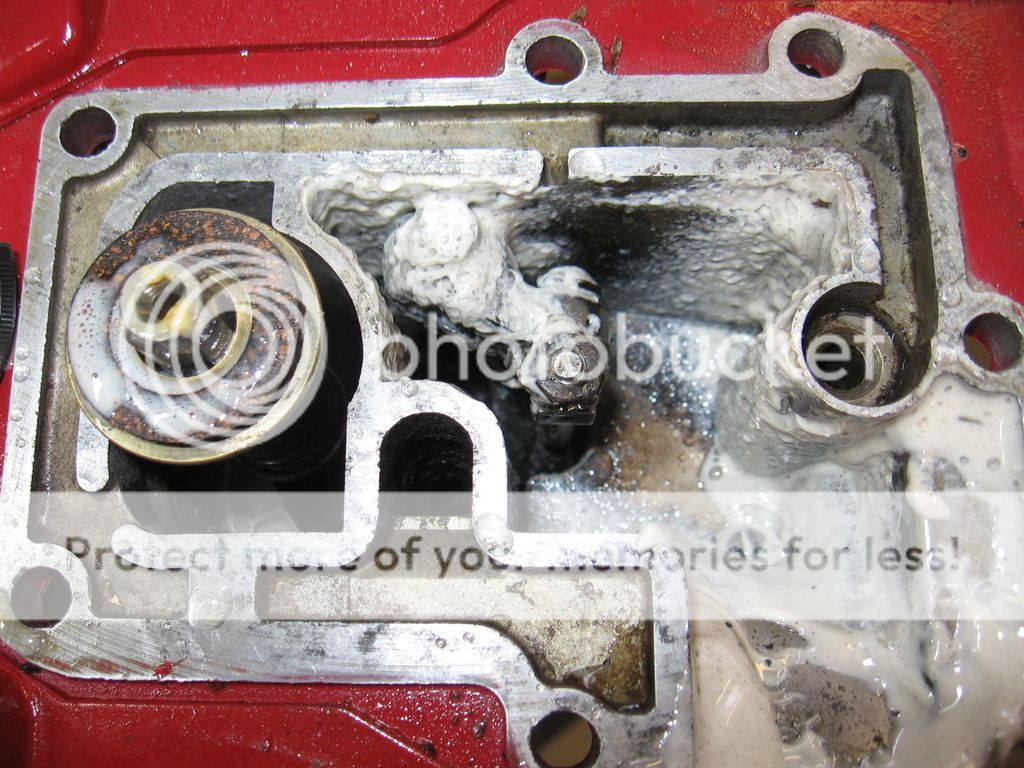
Just finished a test run on my 1956 AD-10 (7.5hp) and found water in the bottom cylinder. Started the tear down and discovered a very tiny hole in the exhaust plate. Prior to the test run, I did a reseal on the L/U and also replaced the gasket and o-ring on the top of the drive shaft as well as the base gasket. The head gasket was not replaced as the compression was even @ 75#. I just inspected the head gasket after the test run and it looks to be good.
 [/url][/img]
 [/url][/img]
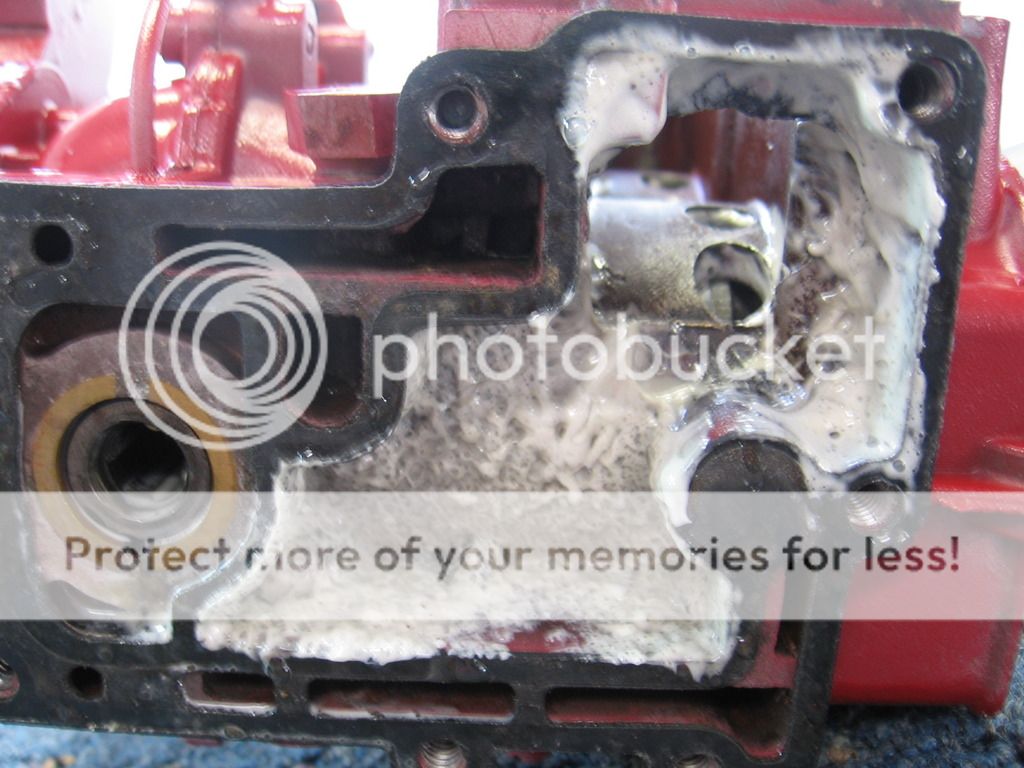
I also ran into an interesting "fix" done by some previous owner as seen in the photo. He apparently threaded a plug into the cavity near the base. Once the plug was removed, the hole goes all the way into the water jacket. [/url]
 [/img]
Can the tiny hole in the exhaust plate cause that much water to be drawn into the cylinder?
I will replace the plate and the plate gasket and the head gasket.
Should I look at anything else? Can I simply put another "plug" into the hole at the bottom of the case. I checked my other AD-11 and the cavity is just that, a cavity. Why someone would try to thread a hole and plug this is beyond me. The motor actually ran well despite the water.
Thanks for the help.January 21, 2017 at 10:06 pm #51470Yes, holes in the exhaust cover plate are fairly common. And yes, it will squirt water into the exhaust ports and yes it will find its way throughout the powerhead and do extreme damage. OK, having said all that, it is hard to tell from here just how bad it is. Water also enters the exhaust housing right below the powerhead gasket to keep the exhaust housing cool. All that goop you see is an emuslsion of gas, oil, and water. Various factors contribute to the goop forming, mostly (cold) temperature. Bottom line is at a minimum you need a new plate and gaskets. If you want to go in and check the con rod bearings, that is your call. But when a rod comes sticking through the side of the crankcase, the party is over.
January 21, 2017 at 10:10 pm #51471Make sure you use the proper 16:1 fuel mix with that motor also.
January 21, 2017 at 11:10 pm #51478Is this the plug laying on top of the block? It isn’t original so maybe a PO wanted to hook up a tell tale or something. For the inner exhaust plate, try and contact 46Zephyr on the boards here as I think he was making them out of stainless.
 January 22, 2017 at 3:33 am #51486
For sure that plug is not original, but I can’t figure why someone would tap that opening. The plug was screwed in crooked and was a bear to remove.
The hole goes all the way into the crankcase. I guess I’ll just JB Weld a plug into the hole. Curious though.January 22, 2017 at 5:51 am #51491Somebody’s idea of a pulse source to drive a fuel pump?
January 22, 2017 at 12:38 pm #51492As I recall… HIGHTRIM makes perfect fitting stainless steel exhaust plates… I installed one on my 7.5
if not hightrim…. one members does them… ask around
Joining AOMCI has priviledges 🙂
January 22, 2017 at 1:49 pm #51493Not me, 46 Zephyr.
I wonder if someone was trying to measure crankcase pressure? Used that threaded hole to install a gauge? No idea.
January 22, 2017 at 11:54 pm #51525OK, well I replied to your other thread, but it sounds like you have this figured out…Does that plug thread into just the cooling passage, or does it go directly into the crankcase? I guess I would just goop up that plug real good and reinstall it, unless it goes into the crankcase as well as the cooling passage.
Like Frank says, powerhead disassembly at this point is a best guess judgement call. It is amazing how strange exhaust pulses can draw water back into the powerhead. At this point, the powerhead, exhaust cover, and cylinder head are off, won’t take much more work to split the crankcase and pop the rod caps. There are no needle bearings to fuss with, making powerhead work pretty simple. If the rods/crank are OK, then it won’t take much more work to do the quick hone job, and replace the rings. I guess it all comes down to how much you like this engine, and how much you plan to use it. -
AuthorPosts

 [/url][/img]
 [/url][/img]
 [/url]


- You must be logged in to reply to this topic.