

Home › Forum › Ask A Member › A special Milemaster Pressure Tank??
- This topic has 22 replies, 10 voices, and was last updated 3 years ago by
JOSEPH BRINCAT.
-
AuthorPosts
-
July 22, 2020 at 9:55 am #209424
Yes, what mas said.. A reserve fuel tank. Many ( all ?) the British motor cycles had a reserve system incorporated in their fuel tanks. These worked with a three position petcock, closed, open to primary fuel volume and third position for reserve.
Joe B
July 22, 2020 at 6:15 pm #209475OK…case closed. The reservoir is an “oil measuring/mixing” reservoir.
Watch the video…sorry I’m not a professional film producer!
July 22, 2020 at 7:03 pm #209478Watched the youtube video, definitely seems to be a reservoir for measuring an exact quart of oil…. Very ingenious… But, this just seems like a lot of engineering and expense with not much benefit….Didn’t outboard oil come in quart containers back then? Why design all this when you could just dump the quart container of outboard oil into the tank….
Very cool nonetheless…July 22, 2020 at 9:10 pm #209495Very interesting, but as Fleetwin says “Why”. Quart bottles and cans of oil have been
around a very long time.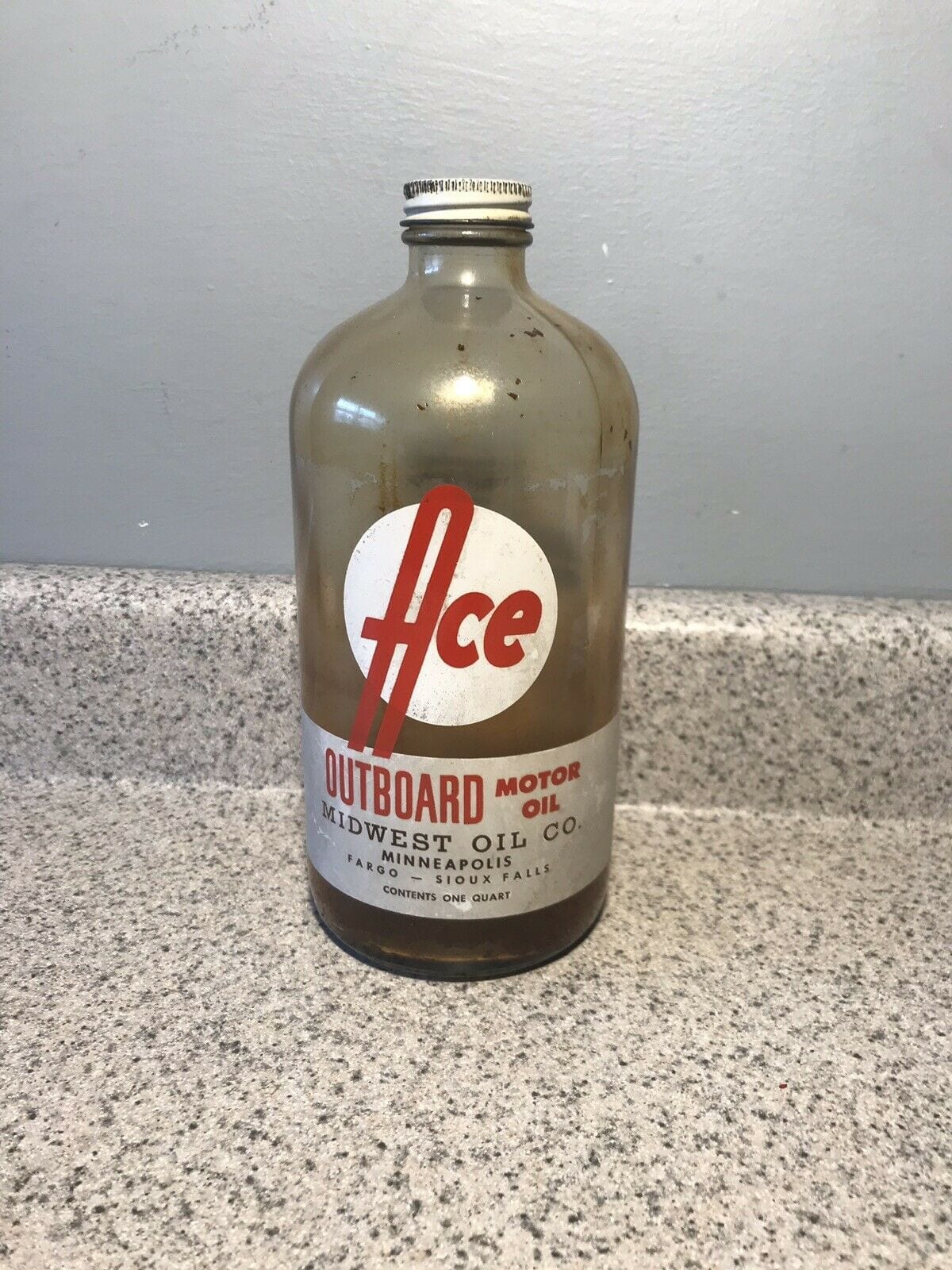
Prepare to be boarded!
July 22, 2020 at 9:35 pm #209499Quarts, yes! Maybe that’s why it never made huge production. But, they made gallons too. I just do not believe it was home-brewed.
July 24, 2020 at 1:27 am #209680I have one of the earlier flat top three piece tanks that has baffles. This tank has rounded shoulders and baffles so I wonder it was one of the earliest of that type produced? Sort of a hybrid.
I can’t figure out the two sealed screws in the bottom though. Maybe pinhole repairs, but the condition of the tank looks good. It’s hard to imagine that’s from the factory. It doesn’t seem like screw holes in the bottom of a fuel tank makes sense. Hopefully someone can shed some light on this.
Hey Aquasonic…any chance of posting pics of those baffles? I would like to see the variations in tank designs for these pressure tanks.
Thanks if you can,
Mas
July 25, 2020 at 4:18 am #209770OK – you figured it out without the instruction manual. It was an after markret device for those who wanted to “top off” a six gallon tank that still had some gas in it. The volume of the device is 1/24 of the tank volume – one quart. To top off a partially filled tank you closed the port and put in oil to the “Full” mark, Then opened the port and added the gas to the “Full” mark. Shaking the can vigorously resulted in a perfect 24 to 1 mixture. They were kind of expensive, but still less tan a new tank. You were assured you could always eave the dock with a full tank of perfectly mixed fuel.

-
This reply was modified 5 years, 8 months ago by
garry-in-michigan.
-
This reply was modified 5 years, 8 months ago by
-
This reply was modified 5 years, 8 months ago by
1 user thanked author for this post.
July 25, 2020 at 6:59 am #209780OK, I get it now… There will be some premix in that cannister when the tank is partially full. Simply close the valve, fill the partially filled cannister with oil, then open it and add fuel. Always the right mix….Cool!
July 25, 2020 at 9:48 am #209789Thank you for the info Garry. You provided more than was in my small brain. The part about a mixing partial tank is where the tank has its advantages.
Are they more common on the east coast or mid-west? I have never seen one around in the west. Anybody have any literature?
Happy Boating,
Mas
July 25, 2020 at 11:02 am #209801It was build by another company but endorsed by OMC. I no longer have the service bulletin that gave the information. I recall it came out around 1953 or ’54 . . .
-
This reply was modified 5 years, 8 months ago by
-
AuthorPosts


- You must be logged in to reply to this topic.