

Home › Forum › Ask A Member › AD-12 overheating – new impeller too!!
- This topic has 21 replies, 13 voices, and was last updated 8 years, 10 months ago by
 1946zephyr.
-
AuthorPosts
-
May 10, 2017 at 11:17 pm #57474
I’m confused, have you replaced the impeller already, or not?
Yeah, I would certainly try to lower the engine down into the bucket more, or perhaps run it on a boat first. You were touching the powerhead and splashing it with water, did it seem to be overheating?May 10, 2017 at 11:30 pm #57476I noticed on the video you had your hand moving back and forth to the cylinder. Take your glove off and rest your hand on the cylinder. It will get warm and you should be able to hold your hand on the cylinder without frying your hand, head will be warmer, if it gets to the point you can’t touch the cylinder with your hand, time to shut down and see if something else is restriced. Maybe try putting in forward while idleing.
May 11, 2017 at 12:52 am #57480I don’t have any specific temperature readings. It was getting to hot to touch on the exhaust side and the cylinder head was getting hot. I was splashing water to see if it would cook off because it was getting too hot. Already pulled the powerhead to change the impeller originally. I will probably pull it again and check the impeller, blow out the cooling lines with compressed air, and cross my fingers.
May 11, 2017 at 1:00 am #57482I don’t agree with the splashing water on the powerhead approach.
Spend $10 and buy a laser thermometer. Completely eliminates all guesswork and you’ll ask yourself why you didn’t do it sooner.
The cylinder head will always read very hot. This is not where you should be measuring temperature. Keep in mind that the cooling/water jacket can only supply so much water to a cylinder head, which is really just a heat sync.
With that motor, it is normal to see the exhaust bypass cover get above 143°, even 180°. With almost all of those motors I’ve seen, they are usually burnt paint. What you care about is the cylinders themselves. The exhaust cover is just taking a constant wall of flame even with a brand new motor. Take a look at a 3hp JW and it’s like death and taxes, constant burnt exhaust bypass covers!
Before you go through the hassle of pulling the powerhead AGAIN, follow the other recommendations which all have merit. Chiefly, fill that barrel up more and get a laser thermometer. It’s good to be paranoid about overheating!
May 11, 2017 at 4:48 am #57501I can tell by the noise the exhaust is making the motor doesn’t seem deep enough in the water and it’s probably sucking air in thru the reverse inlet cover right above the anti ventilation plate. The exhaust cover on your AD motor has a water jacket behind it and it’s the first thing to be cooled by the water leaving the pump before it’s directed into the powerhead. The 3 and 5.5 horse motors are different as they don’t have water behind the exhaust cover so they tend to burn the paint.
May 11, 2017 at 1:18 pm #57516I have a 55 gallon drum I bought specifically for tank testing that I will fill up today and see what happens. We were planning on taking that motor out for sea trials this Saturday, so perhaps I will do that and keep the shroud off so I can keep an eye on the temps. Maybe when its sitting on the transom it will want to run better.
I agree that splashing water is not a scientific method to see how hot it is. If I find that the motor is running too hot to touch that is when I splash water on it. I want to make sure that it isn’t so hot that it instantly cooks off the water. If it does then I am running to shut her down. I will take a look for a laser thermo, but i am hoping that running in the 55 gallon drum will take care of the issue
May 11, 2017 at 1:35 pm #57518When you run it in the drum, try to have the motor in the water so the exhaust water outlet is not more than a few inches out of the water. At least the bypass plate on the side needs to remain submerged while running and not just the snout. I use a plastic 55 gallon drum as a test tank also. I may upgrade sometime but it does fine most of the time. Sometimes I have to use a big shop fan to blow exhaust gases away from the carburetor if there’s not much breeze but as far as cooling, it does OK. A fan is needed with any tank no matter the size if there isn’t enough breeze to evacuate the exhaust.
As far as the impeller vanes righting themselves when the engine runs even if they get turned backwards, sometimes they do and sometimes they do not. I have had several motors apart OMC and Mercury with various sizes and shapes of rubber vane impellers and have found a number of them with some of the vanes bent backwards after being run. The latest one was a ’73 Johnson 25hp. It was still pumping OK, but I changed the impeller as a preventive measure and found this when I opened the pump housing. This motor had been running on a coworker’s pontoon for 5 years and was brought to me for service. I ran it in my tank before servicing the pump also.
-Ben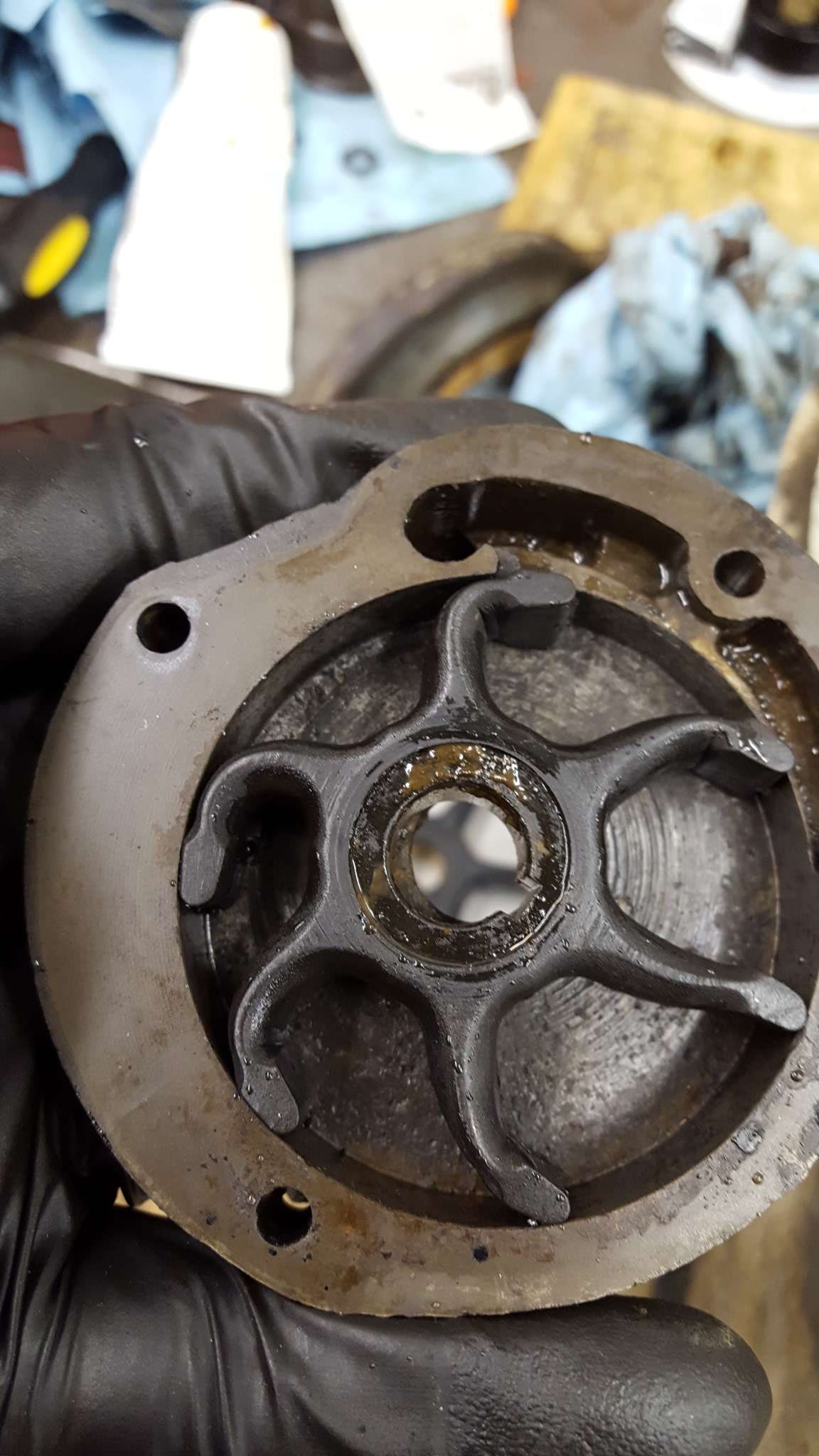
OldJohnnyRude on YouTube
May 11, 2017 at 2:14 pm #57521OK – I re-ran it in the larger drum with more water. Filled it up to just below the exhaust port so that I could see the water discharge. Results? Much ado about nothing, thank goodness!! As the video shows, I could hold my hand on the jugs and exhaust cover without any issues. The head and the top and side of the exhaust cover were a little hotter, but that is to be expected.
Thanks for your input!! Like I said, this is the girlfriends baby and she would be VERY upset if we cooked her "pretty" motor
May 11, 2017 at 2:26 pm #57523running in the 55-gallon drums can pretty easily lead to the motor sucking in it’s own exhaust too, because the longer it’s running in there, the more aerated the water becomes. This sometimes even happens with my 275-gallon tote.
Go have fun with the motor!
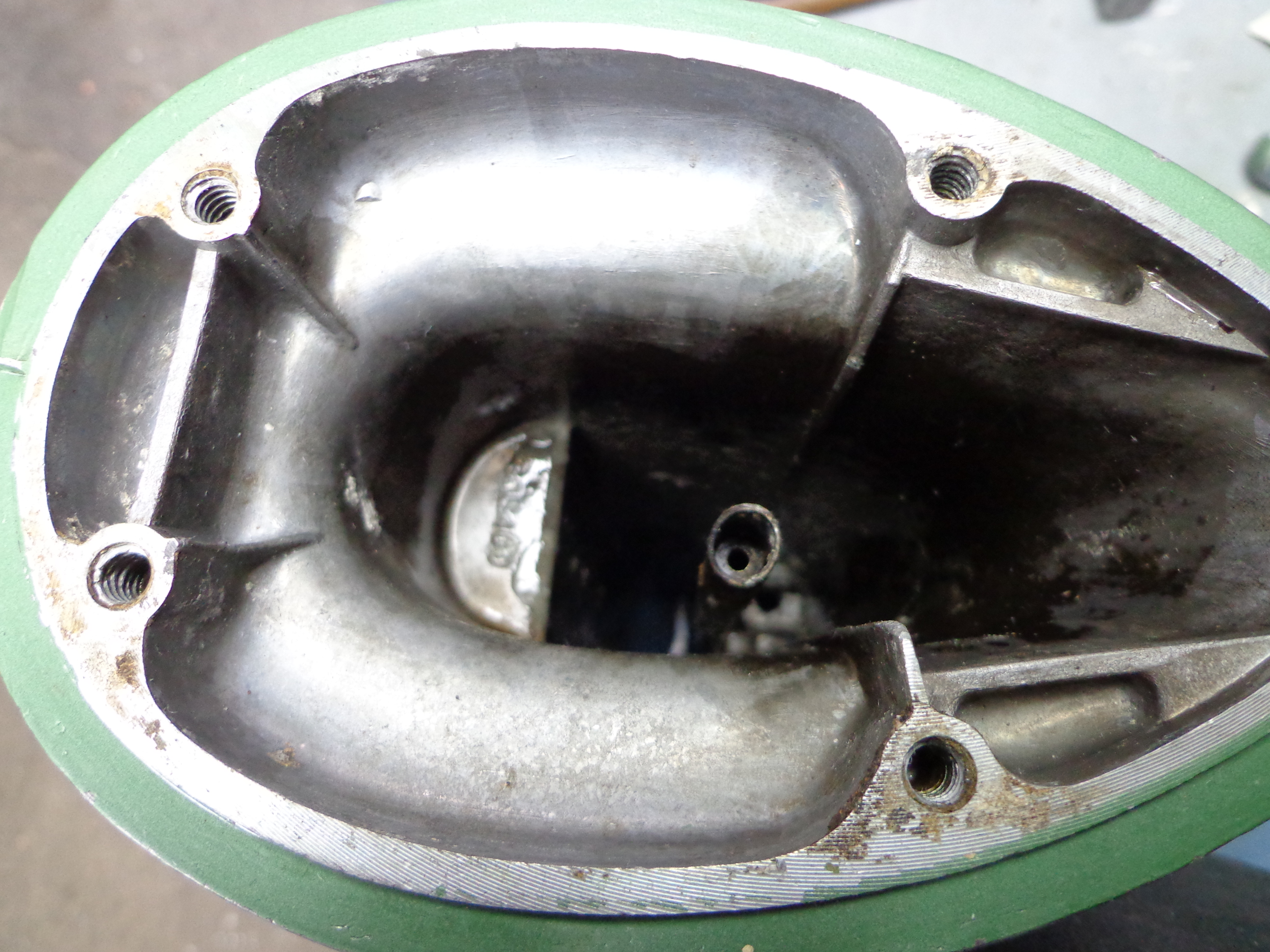
May 11, 2017 at 3:00 pm #57527Has the motor ever been used in cold Northern waters or in salt water? Some motors sold in cold water areas had the restrictor mentioned before and it can plug up quite easily. Salt can corrode the area around the upper water tube grommet causing a massive internal leak which is hard to detect.
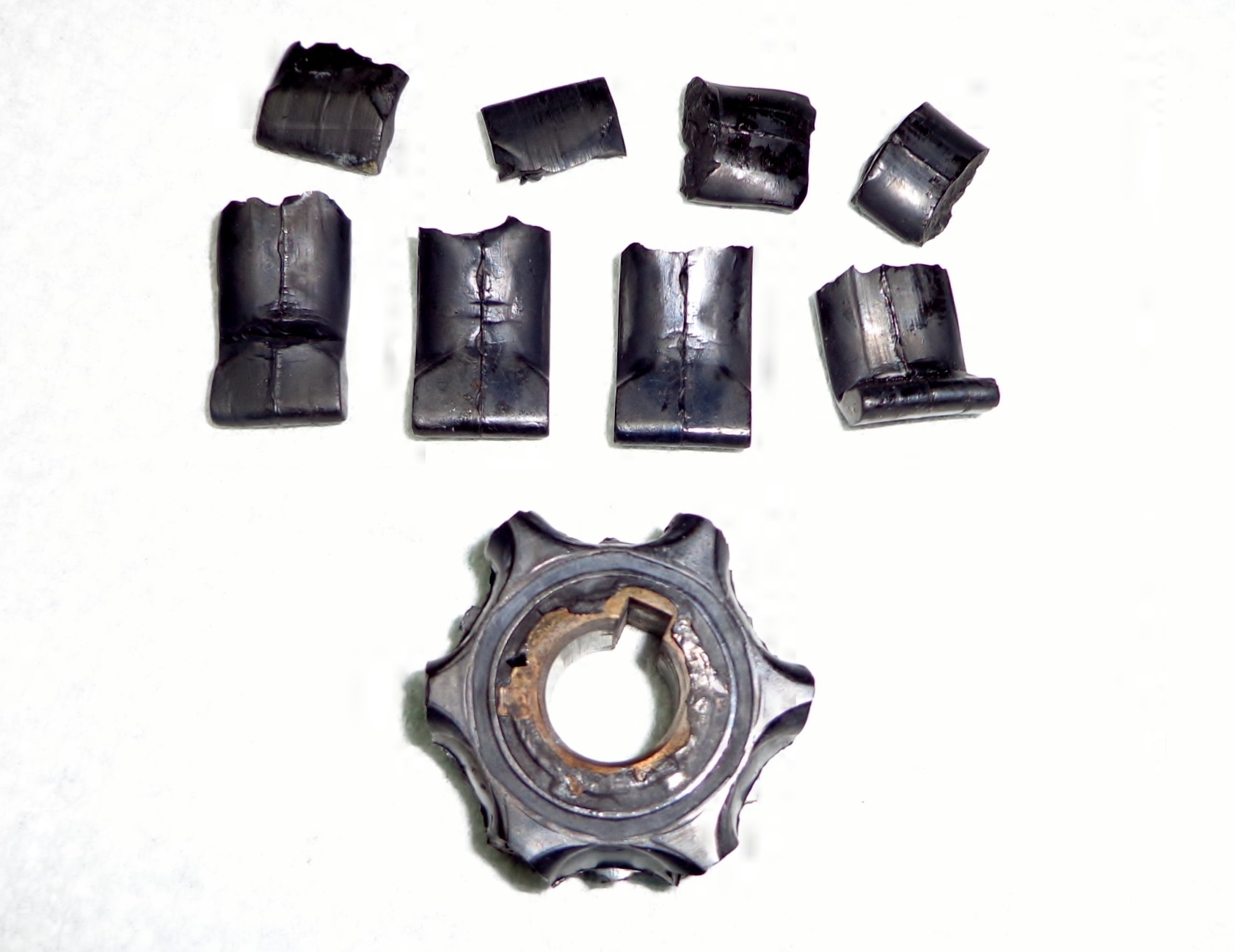
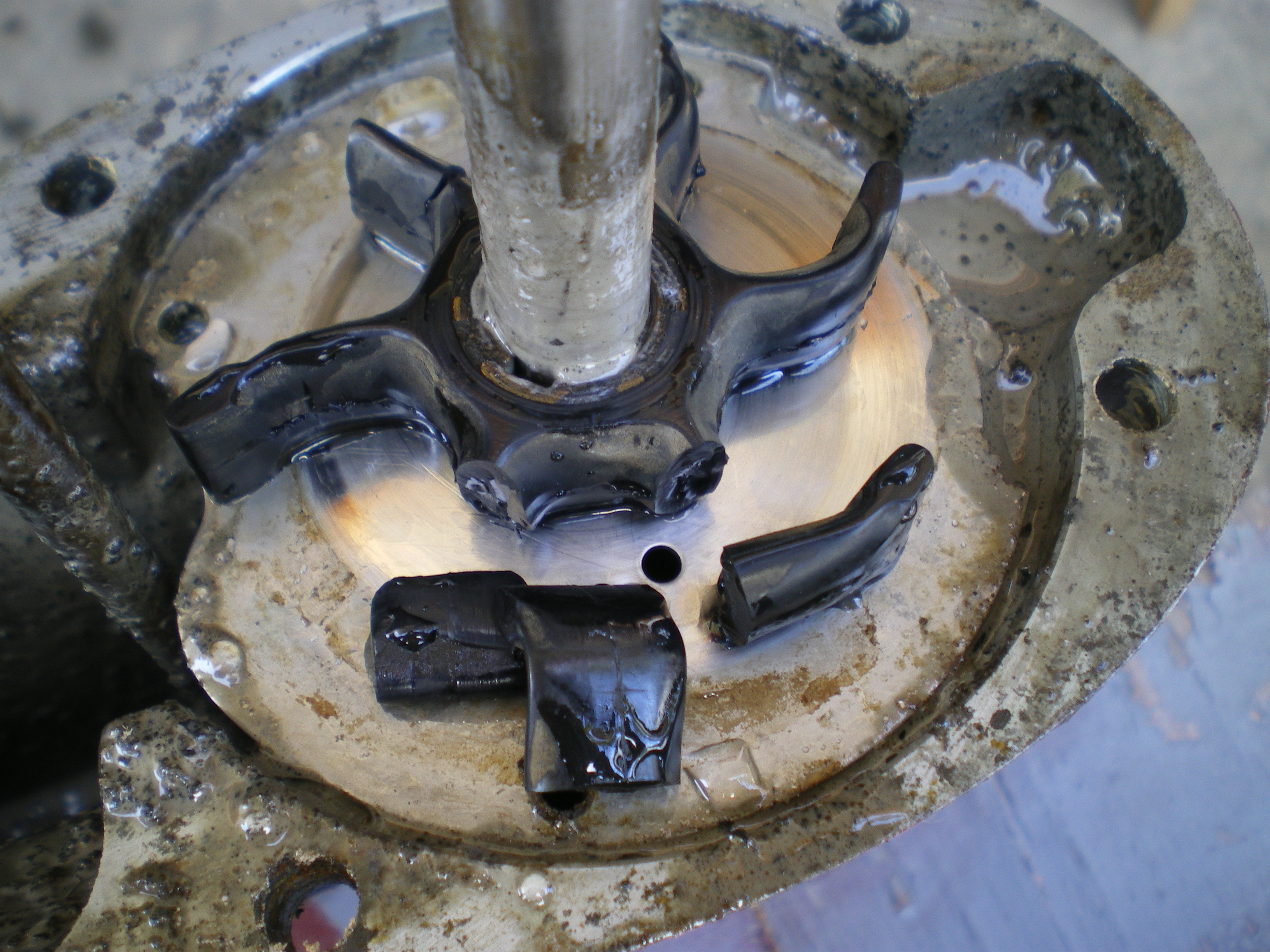
Was the old impeller missing any pieces of the vanes? Small pieces can plug the water passages and must be removed to prevent overheating. The powerhead will come off easily now in one piece so the water tube can be checked for any clogs in it. If you hook a drill up to the drive shaft, you can spin it to verify the pumps output. If everything checks out OK, pick up an infrared thermometer so you know for sure what temperature the motor is running at. If it’s still running too hot, I’d start to suspect a leaky head gasket.
Here’s a photo of the restrictor and it’s small water passage. If it was plugged you would have zero amount of water flow.
Attachments:

-
AuthorPosts


- You must be logged in to reply to this topic.