

Home › Forum › Ask A Member › Johnson RDS questions
- This topic has 4 replies, 4 voices, and was last updated 8 years, 10 months ago by
ADAM GIBB.
-
AuthorPosts
-
May 29, 2017 at 1:42 pm #7160
I have just gone over a 1960 Johnson 40 super quite. The motor starts, and runs well. I have run a lot of the older RD engines, but have not spent much time on the RDS type. A few questions come up.
1) After replacing the impeller, everything looked as it should. Pump plate good, sealed the housing. water tube grommets are good. The thermostat works and and passages in thermostat housing were very clean. If seems to me that there is not as much water coming out of the exhaust port under the rear of the cowl as I am used to seeing on the earlier engines. Is this typical?
2) I ran the motor on a boat at low speed for about 1-1/2 hrs. I stopped to see someone and then after re-starting, I was getting a misfire at low throttle only. After a bit of running wide open, the motor idled well again. I would assume that this was the beginning of the plugs fowling. The motor has J4Cs in it. If it will see a lot of low speed operation, could it be switched to J6C? Running 24:1 with a good quality Semi-Sythetic oil.
Any advice would be helpful.
Thanks
AdamMay 29, 2017 at 5:44 pm #58585The small amount of water discharge you are seeing is normal in these RDs with thermostats. They just put out some spray when the thermostat opens.
J4C is the correct plug for it. Before you go to hotter plugs, try a bit leaner setting on the idle mixture screw as long as it runs OK. If you continue to have problems, I’d make sure the low speed gas passages from the carb bowl up through the needle valve and into the top of the carb throat are clean and clear. Spray carb cleaner through them all. Be sure the float level is correct. If you are going to idle like that a lot offor hours at a time, then, the J6C may be the way to go, but the J6C can self-destruct at sustained high speeds.
I’d leave the motor alone unless it happens again – you could have just had something in the gas that had to work through the carb.
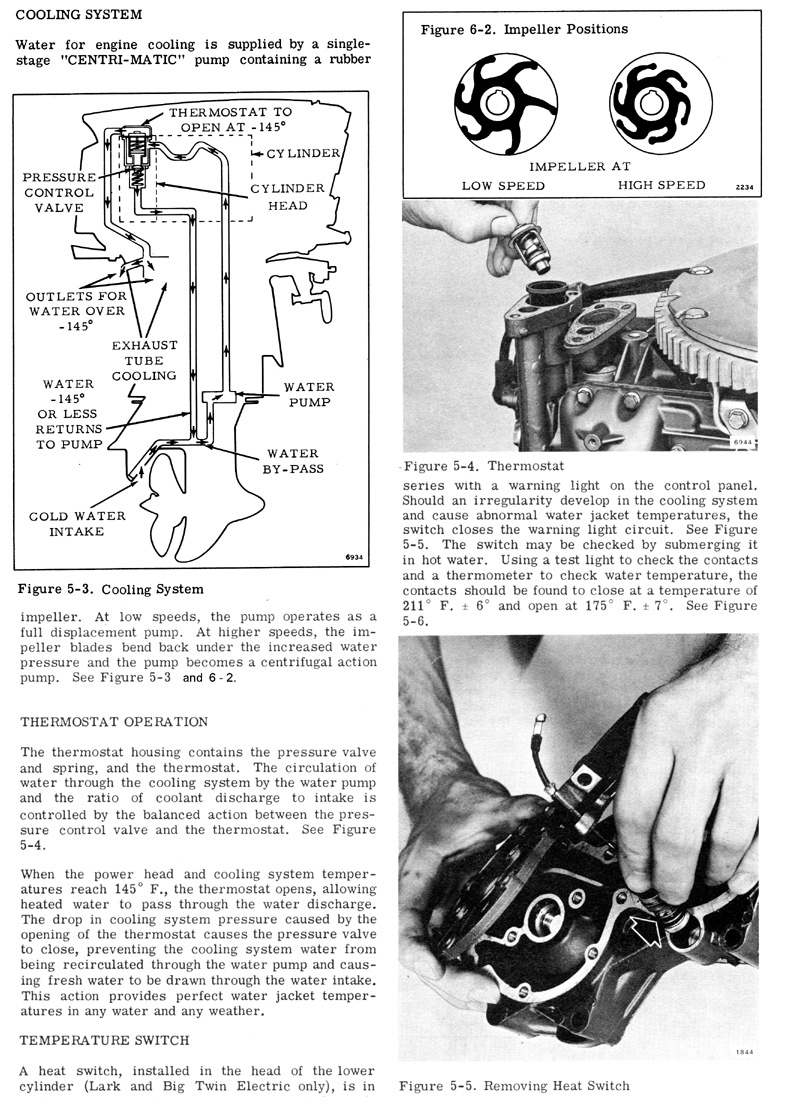
DaveMay 29, 2017 at 6:23 pm #58588That model operates at a normal temperature of 150 to 160 degrees.The water circulates through the system until the thermostats begins to open at approximately 140 degrees. Until that happens, only the water bypassing the thermostat via the notch in the thermostat housing will be seen at the outlet in the back of the exhaust housing. When making idle adjustments to the carburetor, the access door is open and the motor is running on ambient temperature. It may take five minutes after that access door closes before the temperature stabolizes and the new adjustment is realized.This is true when the motor is shut off for any length of time.The choke is far from perfect and poor idle from lean operation is normal until the temperature stabolizes. The underwater exhaust outlet on that motor is very efficient and it will run with negative pressure at speed on a fast hull. This means 90% of the cooling water exits the motor under water and very little is seen at the exhaust relief outlet at the rear of the exhaust housing. This lead to the installation of the overheat warning light, since visible water was no longer a reliable warning of cooling problems. This page is from the 1964 Lark service manual. . . 😉

 May 29, 2017 at 11:41 pm #58602
It is important to realize that is a thermostatically controlled recirculating cooling system. Water from the pump goes through the powerhead and is then presented to the thermostat. If the thermostat says it is too cool, it is directed back to the water pump for recirculation.
But a bit is bypassed to keep the exhaust cool. That is the light spray you see when it is not at operating temp. When it is warm enough, the ‘stat opens and more water is discharged, resulting in a heavier spray. This process goes on constantly, with the ‘stat opening or closing as necessary. So, you will see varying amounts of spray being discharged. In fact, at slow speeds in cold water, it may be in recirculating mode all the time.May 30, 2017 at 11:18 am #58620Thank you guys!
I don’t have a lot of experience with the T-stat motors and this helps to explain what I was seeing.
I will run it a bit longer and see that the idle passages in the carb get another cleaning.Thanks again,
Adam -
AuthorPosts


- You must be logged in to reply to this topic.