

Home › Forum › Ask A Member › maybe i need to check it with a tach?
- This topic has 32 replies, 9 voices, and was last updated 9 years, 6 months ago by
gjonz.
-
AuthorPosts
-
August 31, 2016 at 7:51 pm #43063
Yeah, a 14" pitch prop sounds pretty optimistic for that engine/boat….
August 31, 2016 at 9:33 pm #43069Scott, if your Quicksilver hose has red print on it, it is most likely coming apart on the inside. Mercury has changed their hose material, and no longer manufacture the hose with red printing on it. The new hose is stiffer and has blue print on it. The old red print hose is notorious for falling apart on the inside. Pull of the connector on each end and inspect. Also keep in mind, the aftermarket OMC fuel connectors look almost identical to the aftermarket Mercury connectors….. unless you are using the old bayonet style connector. I’ve seen folks go to wal mart and buy a connector for their omc and end up with a Merc connector, just because they look the same and will plug in. Some aftermarket Yamaha connectors are also a dead ringer for an OMC! This may or may not be your problem, just throwing out a few idea’s. I’ve thrown away a truck load of this aftermarket stuff, because of the problems I’ve seen it cause.
September 1, 2016 at 11:25 pm #43163I had the very problem Jerry described earlier this summer. Grabbed a tank fitting out of the garage stash and put it on a new tank. Plugged in the motor and it was running like junk. When I unplugged it, I noticed it fit poorly and had a slight drip. Put on my good glasses and looked it over. Sure enough, it was a Merc connector. At first glance it looks just like the OMC part. You have to really look at it side by side to tell the difference.
September 2, 2016 at 2:18 pm #43182Those Merc/Yamaha connectors are metric and the hole is bigger, but like a couple of the other guys, I’m thinkin’ your prop your prop has too much pitch, but that may not be the whole problem. Those 14s are mainly for dual motor applications. I’m running 12-1/2 and 13 inch pitch on several OMC 35s I’ve had on my three 12′ and 14′ aluminum boats with good results. Changing one inch in pitch can be like putting a car in and out of overdrive. First thing I’d do with the carb is open it up and recheck the float level setting to be sure something didn’t get bent when the bowl was put on. The gas line, pickup line, connectors, etc, can all be problematic like the guys here said, but for an immediate bog on a turn, I doubt these items are the culprit if the boat was running strong when going straight. If gas line restrictions are marginally not keeping the carb quite full enough, it should run OK on corners if you run slightly less throttle, requiring less gas.
You mentioned you adjusted the carb high speed jet to the point where it was as lean as possible but not wanting to kill – You should be adjusting for max RPM, and you can hear this – it may need to be a tad richer than just above the edge where the motor starts to falter. I find the lean and rich settings where max RPM sounds like it’s dropping and set the knob half way between these points.
DaveSeptember 4, 2016 at 2:06 am #43248I have a 15 foot Lyman that did the same thing with a 1957 Johnson 35hp. Wouldn’t ring up rpms well.
Started thinking prop. Sure enough…It had at least a 14 pitch. Went to a 12 pitch. Sings like a bird.
Gonna find out again tomorrow on a 80 mile river round trip. Picked up a few mph too.
Greg
September 6, 2016 at 1:33 am #43391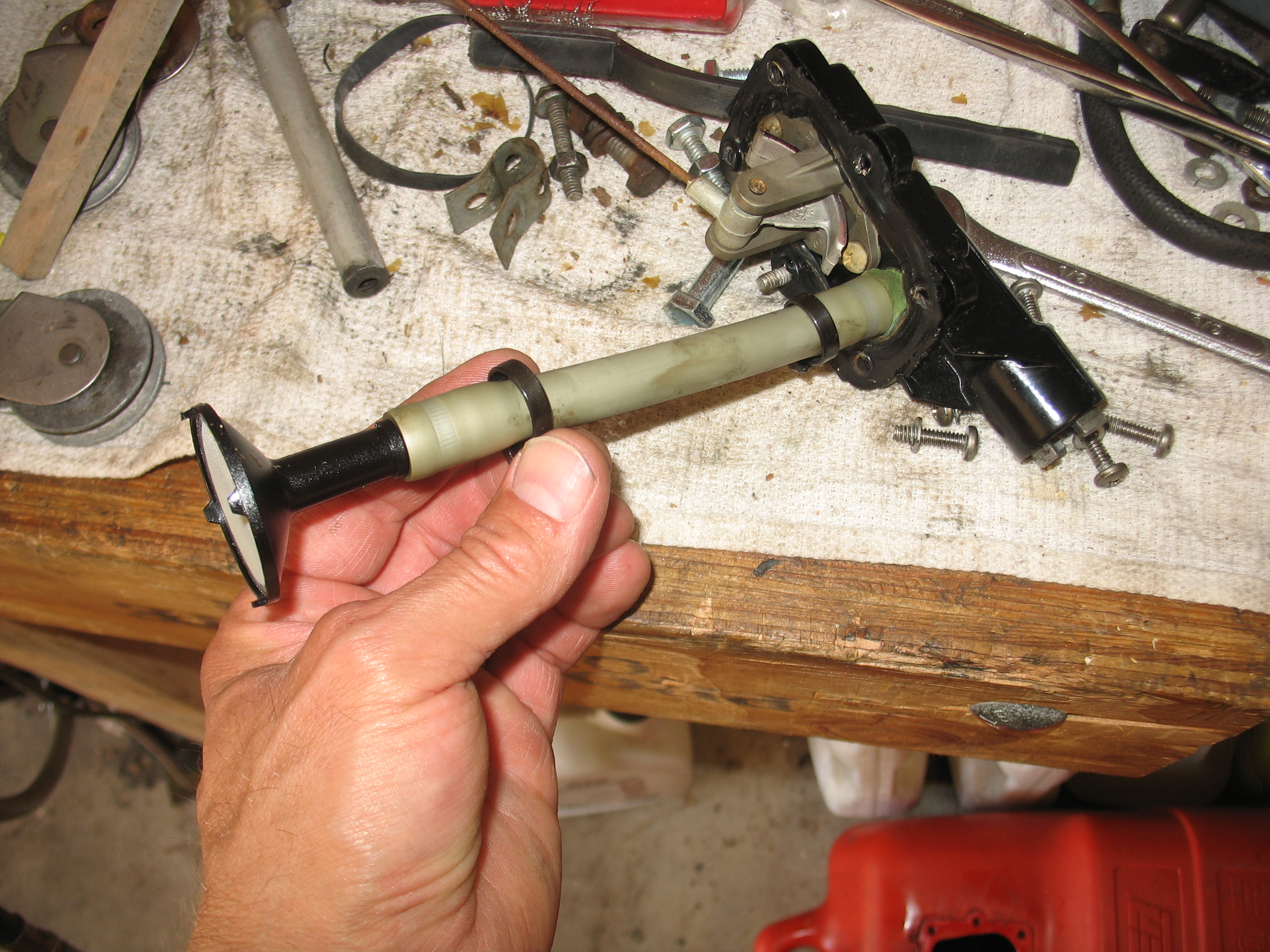
 quote gjonz:I have a 15 foot Lyman that did the same thing with a 1957 Johnson 35hp. Wouldn’t ring up rpms well.
Started thinking prop. Sure enough…It had at least a 14 pitch. Went to a 12 pitch. Sings like a bird.
Gonna find out again tomorrow on a 80 mile river round trip. Picked up a few mph too.
Greg
Well greg, i’d like to hear how it performed. I found a 10 3/8 x 12 1/2 (amc 382) and so i’ll give that one a try.
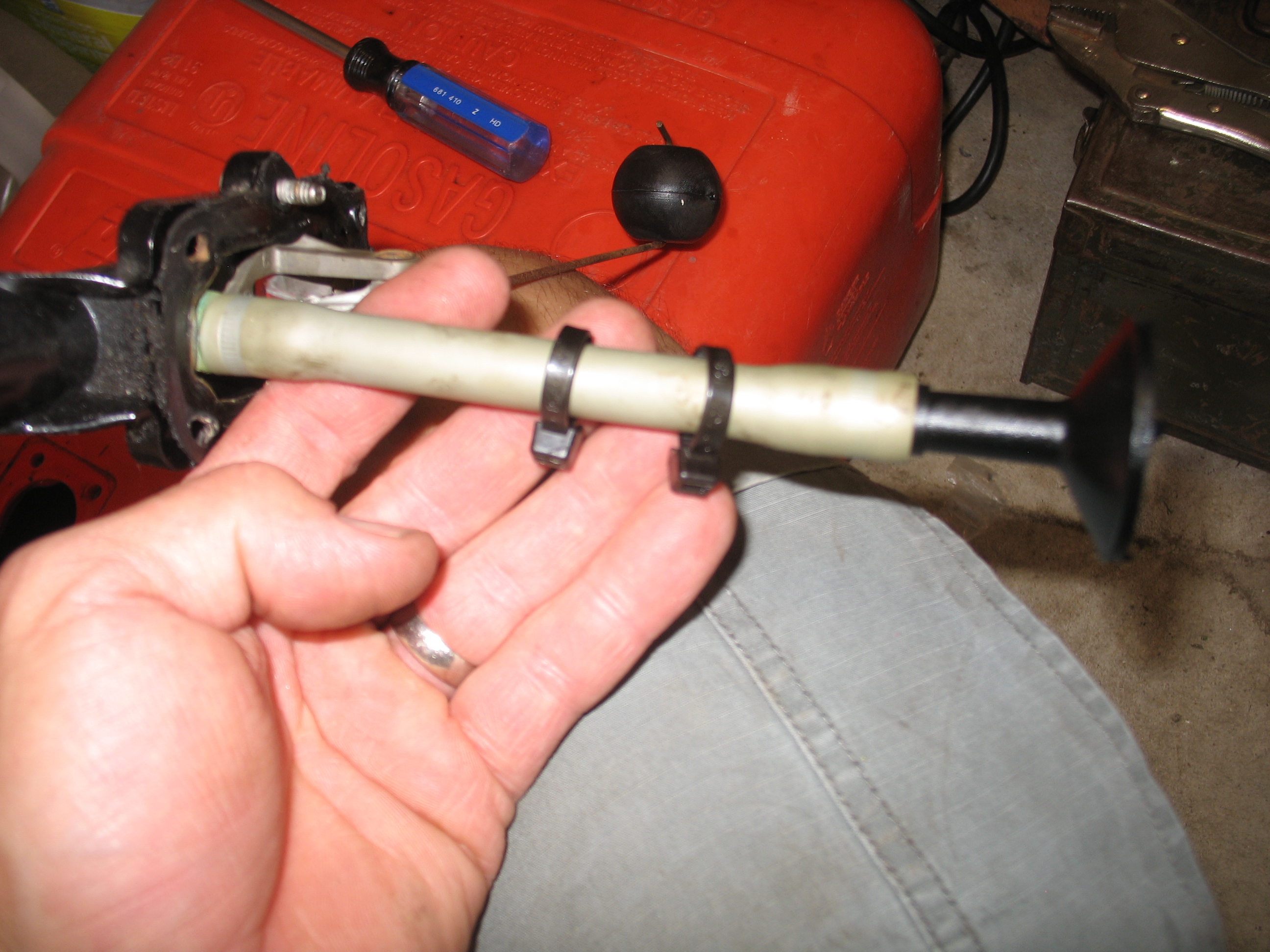
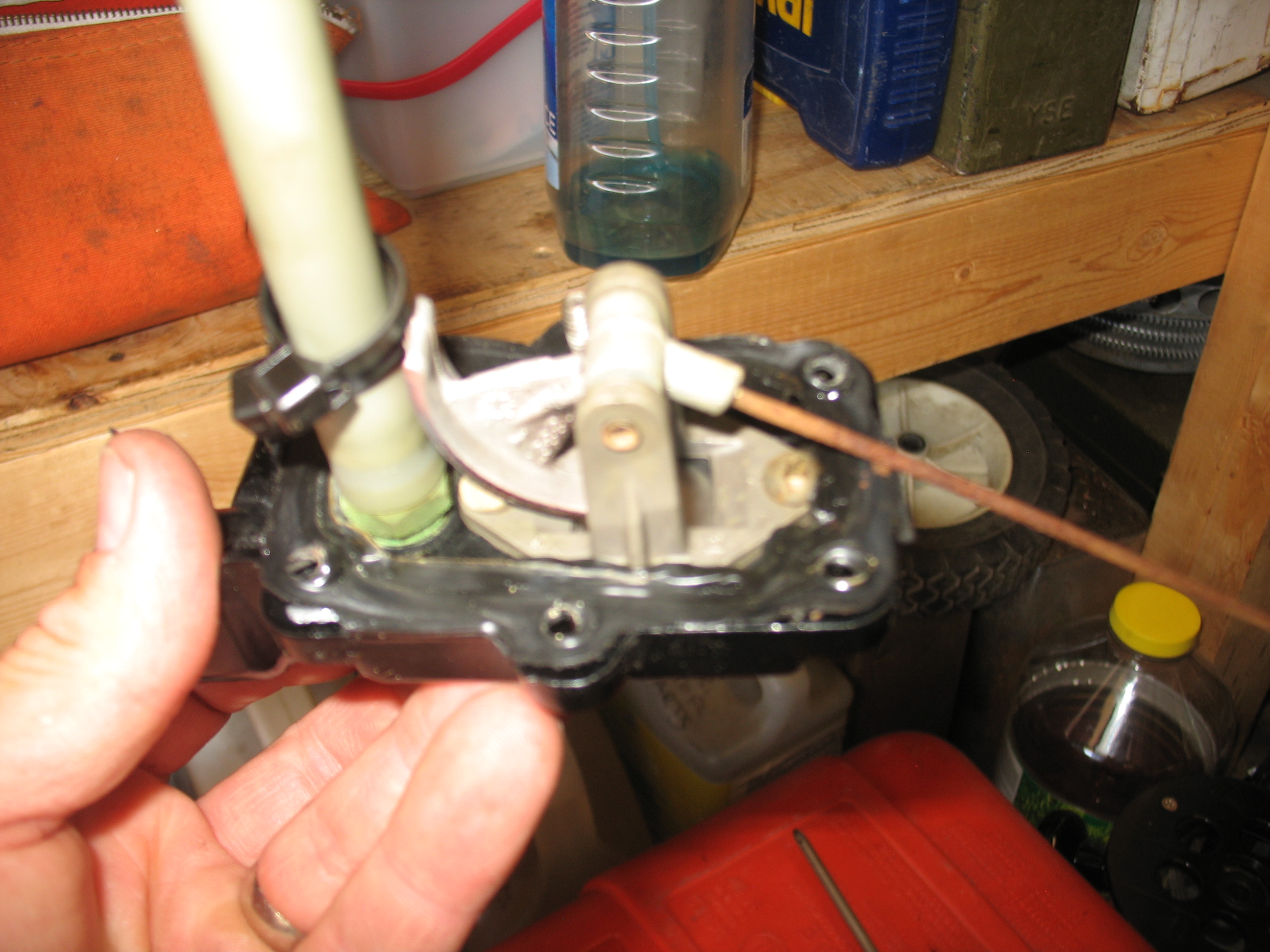
Took apart the tank pick up unit and found the two zip ties were loose. Replaced them but the hose was still intact and seemed secure anyway. BUT, the gasket seemed to be very distorted, almost looked like it had melted. I have a nos one on the way thanks to ebay. We’ll see if the helps. ALSO, the gasket for the cap is missing. Not sure if that would be making a difference or not.
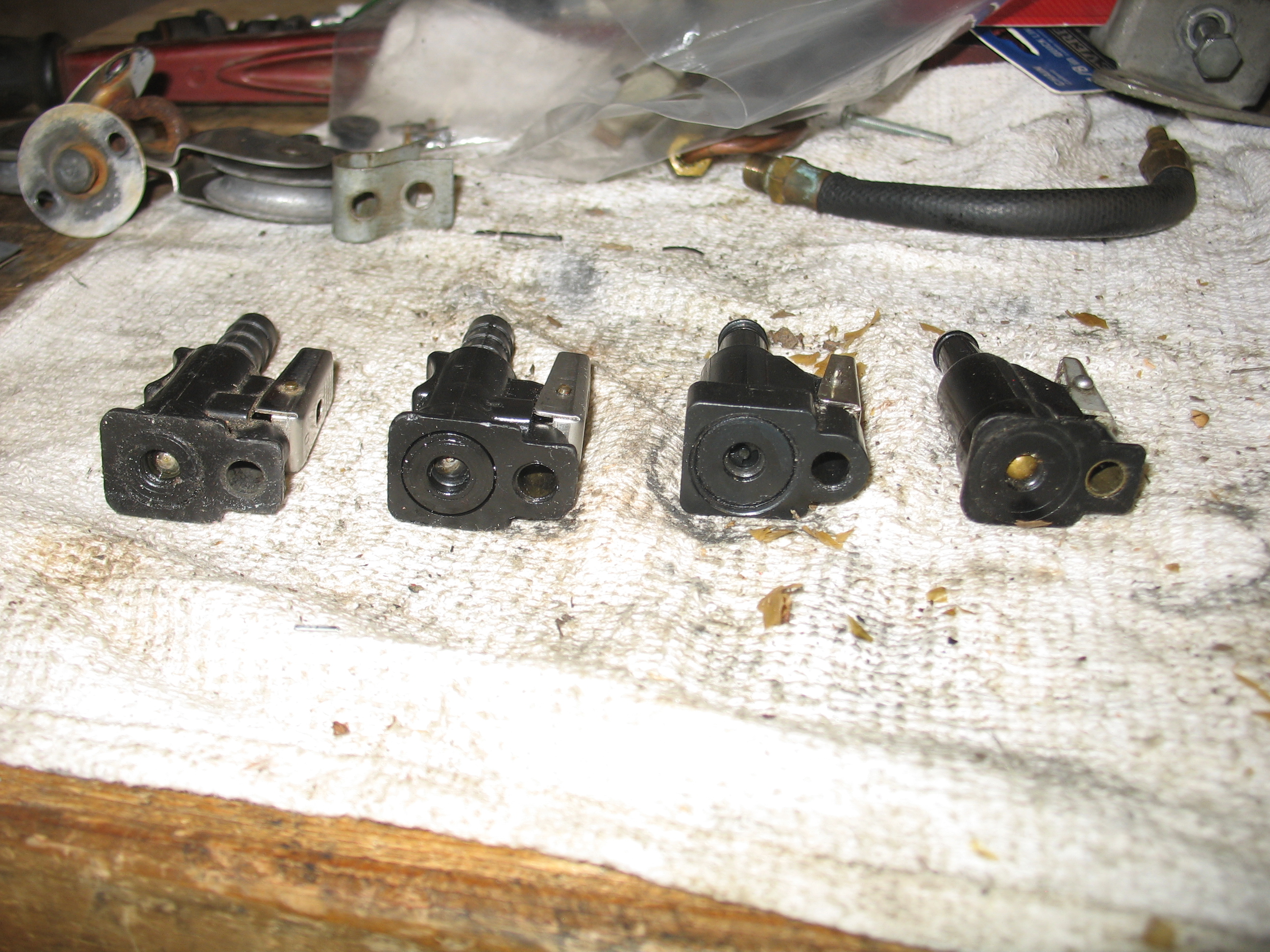
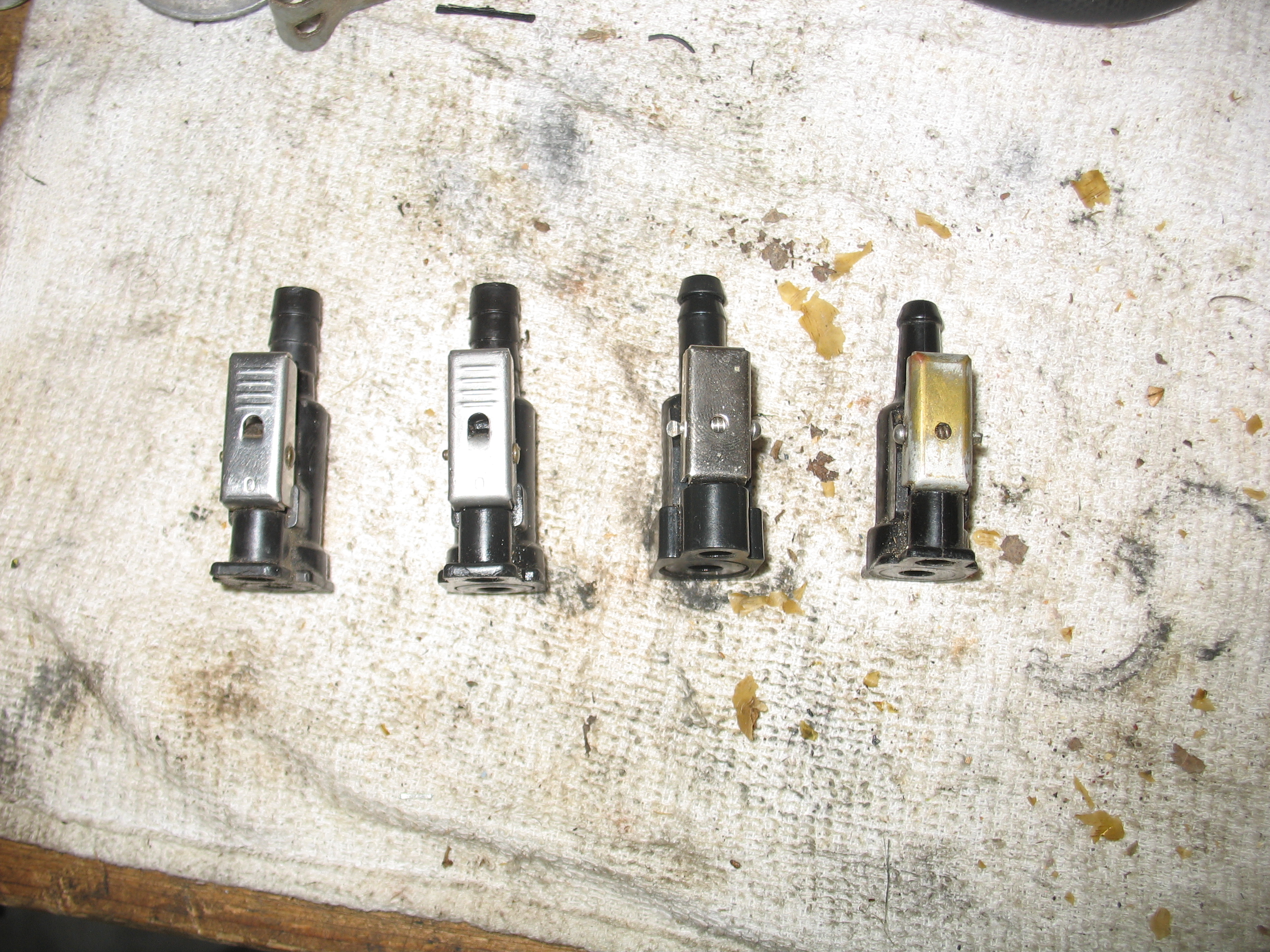
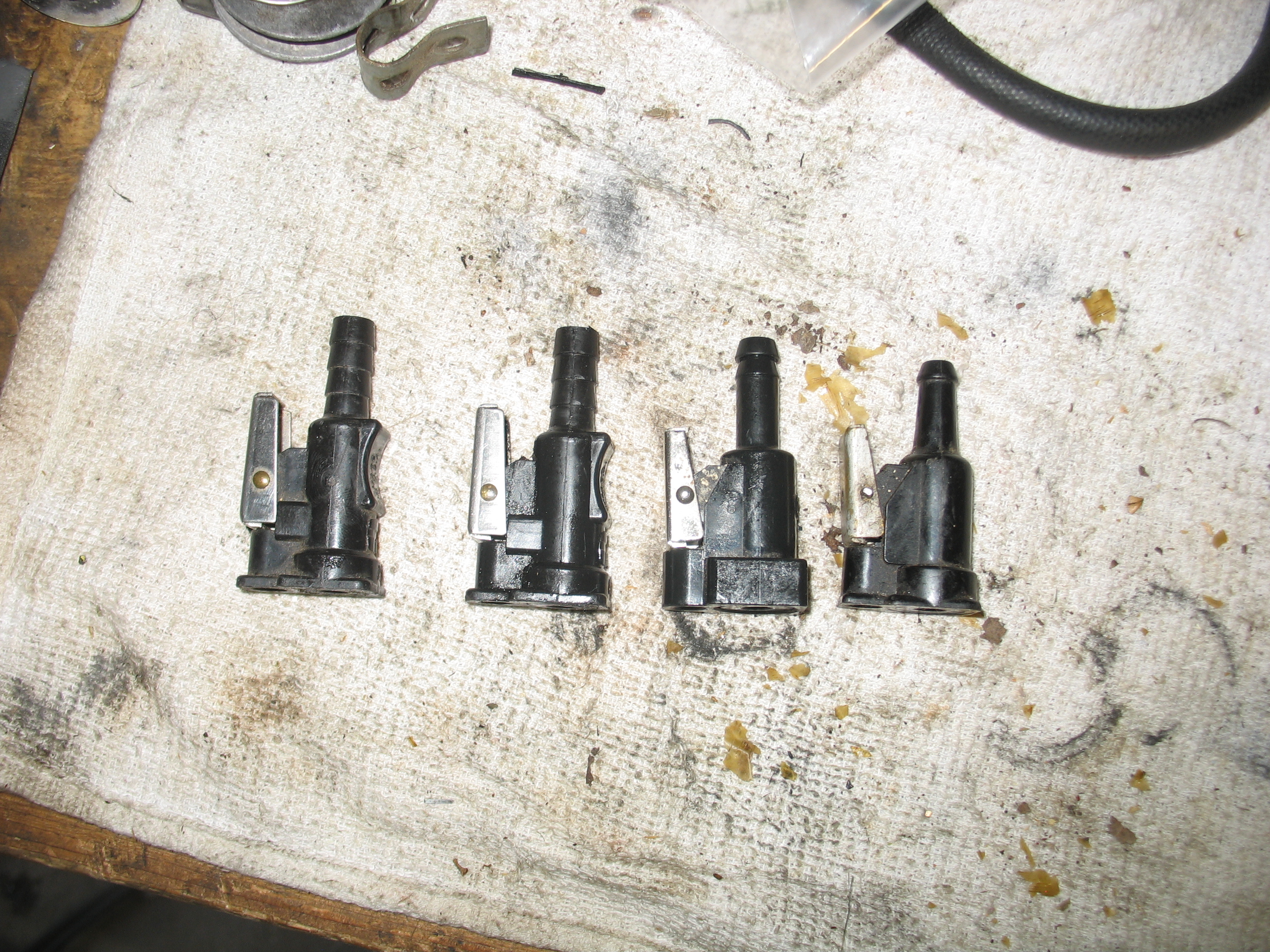
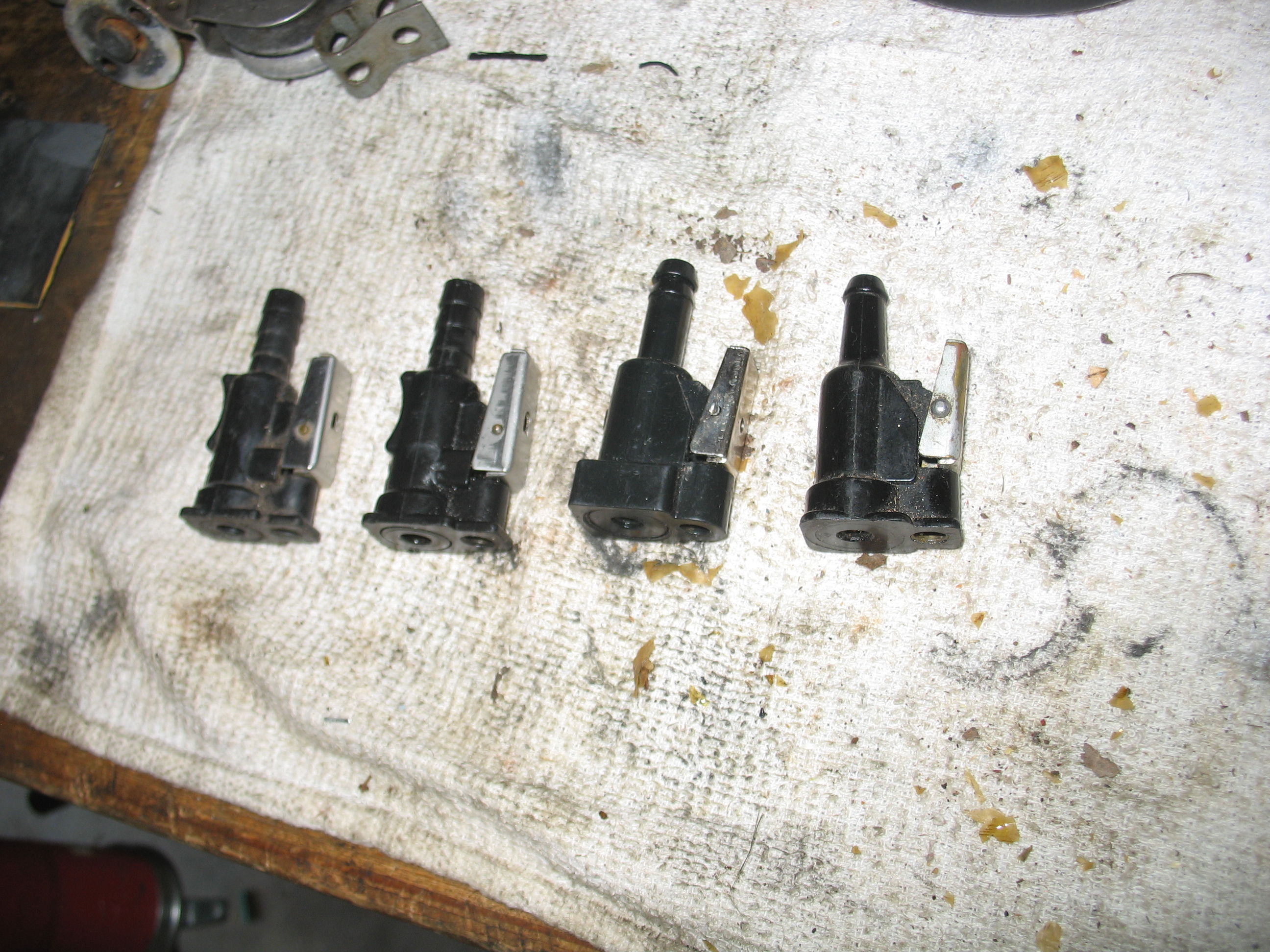
As far as the connector issue goes, I’m quite sure it’s an OMC type and not a mercury one. Here are 4 I have in these pics for comparison. I’m using one like the two on the far left. Sorry for so many pictures. I just want you guys to see what I’m seeing so we can relate! 😀
Attachments:
 September 6, 2016 at 10:43 am #43410
The two connectors on the left are aftermarket for sure. If you are using one of those, do yourself a favor and toss it! Just my humble opinion… Not sure about the third. The fourth is an OMC I believe. Try sucking air through [on the barb end] the one on the right [the OMC connector]. If you can pass any air through, then the o ring is hard and needs replaced, or replace the whole thing for $8 at the dealer.
The gray hose on your fuel pick up on the tank head looks just like the old quicksilver hose that I mentioned earlier. That’s certainly not original, and should be removed and checked inside. I’ll bet you have a vacume leak somewhere in that system. The fuel pump can’t do it’s job if air is being drawn in where the hose connects under those zip ties, or if air is being drawn into one of the fuel coonectors o rings. Does your fuel supply hose [from tank to engine] look like the gray one in the pic? If so, better have a look inside.
The fuel cap gasket, as well as the tank top gasket, will have no effect on the engine, besides a fuel leak in the boat. Of course they both should be replaced.
I always think of the vacume side of a fuel system, the same as drinking soda through a straw. If you poke a hole through the straw, above the liquid line, it will be more difficult to suck [vacume] the soda through it. If the hole, or leak, is to great, it will be impossible! A good test for this is to use a nice new [flexible] piece of clear tubing between the fuel pump and carburetor. Once the engine is ran up to full throttle, to clear out the air pockets in the test hose, there should be no bubbles present in the clear tubing. If there are, then you have air being introduced into the vacume side of the system, somewhere. These are just some things that I’ve ran into over the years.September 6, 2016 at 11:17 am #43412Edit: Looking at your pics again, I see you are indeed using the old bayonet connector on the tank. Another possible source of leakage. I can’t remember, but I think the connector socket on the tank has some sort of O ring in there.
September 6, 2016 at 4:03 pm #43441If you had the Mercury connector, it would be leaking gas when you squeeze the primer bulb.
DaveSeptember 6, 2016 at 4:12 pm #43442quote outbdnut2:If you had the Mercury connector, it would be leaking gas when you squeeze the primer bulb.
DaveNo leaking when priming.
-
AuthorPosts


- You must be logged in to reply to this topic.