

Home › Forum › Ask A Member › Oil Slingers Again
- This topic has 6 replies, 3 voices, and was last updated 4 years ago by
JACQUES.
-
AuthorPosts
-
February 26, 2022 at 10:24 am #255284
Thanks to Crosbyman, Mumbles and others for the education on oil slinger operation. I took the crankcase off my 7518 to expose the oil slinger. I had stupidly pushed it down and couldn’t get it back up. The book says it has to be at least 1/16 above the register to allow oil to pool and get sucked back down in the motor. As noted if the return lines are clogged the excess oil at the top would blow by the slinger. I soaked and blew every hole I could find from all directions.
Question: if the return channels are clear and suction good, wouldn’t air also be pulled past the slinger from above? It isn’t an air tight seal.
Someone has suggested packing the top of the slinger with very thick grease. This might prevent oil being blown back up past the slinger but also might be sucked down clogging the oil return channels. Someone else suggested sealing this space around the slinger with epoxy. No oil coming up but no air going down.
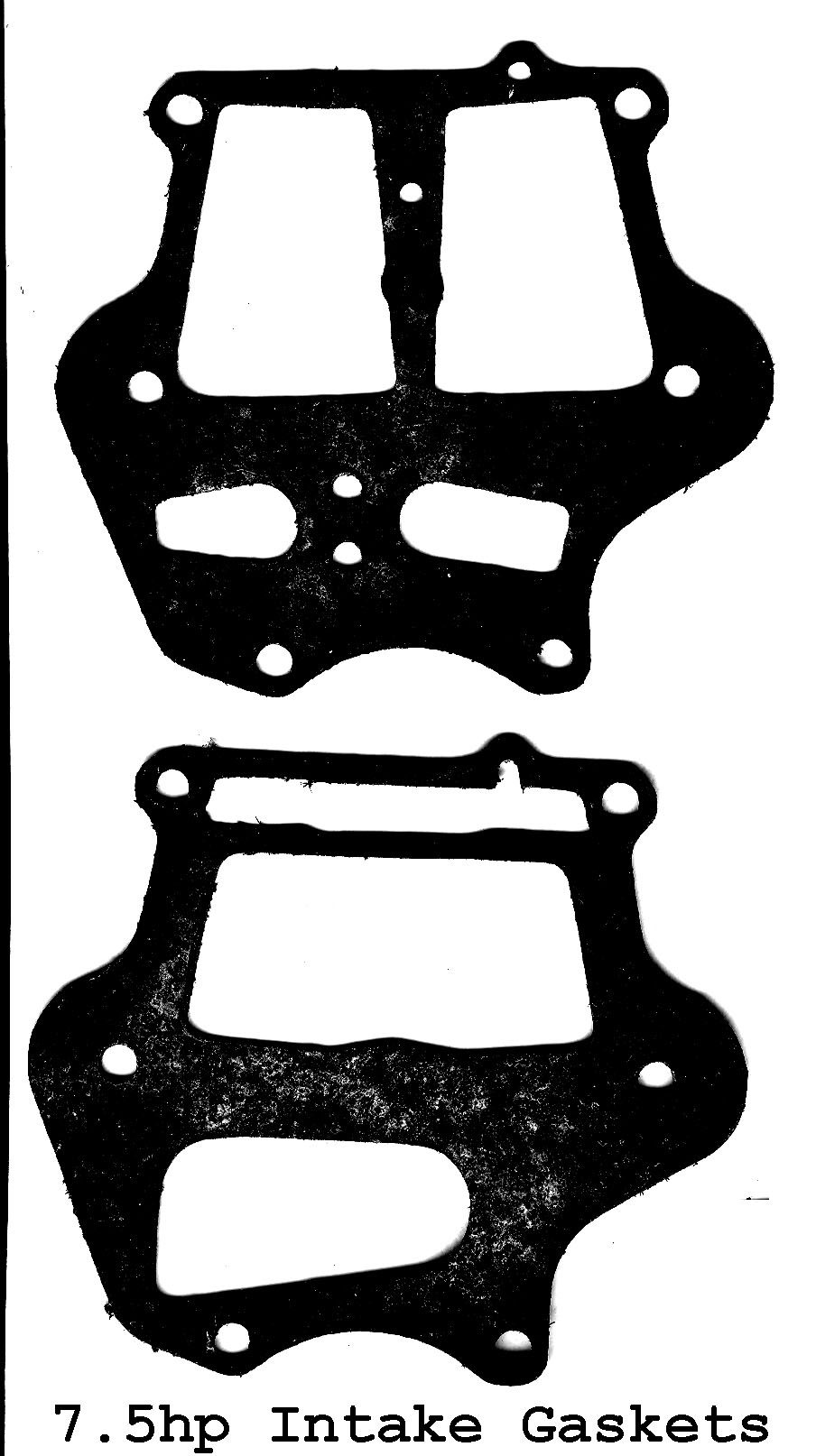
Finally, does the whole oil slinger spin on the crank shaft or is it fixed and the crank turns inside? Knowing this for sure might answer all of the above. I will attach a pic originally posted by “rodwadnz”.
Thanks again. Everything you guys have said has been correct.
-
This topic was modified 4 years ago by
JohnRude.
February 26, 2022 at 10:42 am #255289imho…..if any air sucked back in is not a concern since the volume of air would be minimal % compared to the air sucked to operate the carb venturi effect.
leaving 1/16 implies some friction holding the slinger in place just above the surface. The rotaton imparts the sling effect to spin off any oil to be recirculated .
(*) I reread the book and did not see an actual route to channel any of the escaped oil under the slinger . Presumably it goes back in with crankcase vacum on the upstroke the same way it would have escaped under crankcase pressure on the down stroke.
I any event fixed or not it would surely rotate anyway just like any automatic transmission rotates the inner parts with the simple friction between oily surfaces.
Hopefully F.R. can educate us on this very specific topic 🙂
The design seems to have worked all these years so why worry ? I certainly would not try to modify it with grease or epoxy
with all you have done to clear any possible blockage (*) are you experiencing any further issues ?
btw I remember working on an oldy and the slinger was loosy goosy on top…I eventually sold that engine but never had any comebacks about it . All the oldies I have resold were “money back warranty sales” so if anyone had issues they never came back
. I sell them all $150 after a basic refurbish (coils. points , timing , carb clean condensers impeller GC oil… & most were converted to pump ) just to recoup my costs and keep me busy in the basement during winter.
Joining AOMCI has priviledges 🙂
February 26, 2022 at 2:18 pm #255296John, you may have missed it, but I’ll promise you that there is a route from the slinger area, down through the reed plate, to the intake manifold. Manifold vacuum is what sucks the oil down to the manifold to be recycled. The route through the reed plate includes the holes at the top of the gaskets, shown in the picture.
You are correct that a passage such as that could cause a lean condition. But they thought of that a long time ago, and there is a small orifice somewhere along the way to control the amount of airflow.
Yes, the slinger is a press fit on the shaft and rotates with the shaft, and there is a space below it. Any attempts to modify the design would—–well modify the way it works. It is a well proven design, used on a few trainloads of small OMC motors. No, it is not 100% absolutely effective. A small bit of oil may get through and onto the points. But by then, you would be going into it anyway for a routine ignition tune-up, wouldn’t you?
 February 26, 2022 at 3:43 pm #255308
Frank, I understand the oil drains down from the upper and lower crankcase sending the residues down to the purge valve but is there actually a drain under the slingner or is oil just sucked back via the upper seal/bearing surfaces. ?? pictures in the RED book do not mention such a drain to suck the oil back in.
Jacques
Joining AOMCI has priviledges 🙂
-
This reply was modified 4 years ago by
February 26, 2022 at 5:59 pm #255314OK so I might have screwed that up. I don’t have a 7.5 hp to examine, but I do have a 5hp Gale, a 12hp Gale, and a 6hp E’rude. The 6hp has a real oil seal, but otherwise there are a lot of similarities. At least on the Gales there is a groove cut in the upper bronze bushing. The vacuum from the intake manifold is applied to one end of that groove and the other end of the groove connects to the hose going down the side of the powerhead to the lower bearing. So, intake manifold vacuum is sucking oil from the lower bearing, up through the hose, to one end of the groove to lubricate the bearing. The other end of the groove goes back to the vacuum source, the intake manifold. So, where I goofed up is there is no vacuum passage to the area between the bearing and slinger. Instead, the groove is very close to the top of the bearing and gravity is depended upon to settle the oil back down through the end of the bearing and to the groove. Um…did I mention an “orifice” to restrict the air flow? How about that short section of bearing clearance to do the same job? Pretty dang ingenious if you ask me.
All this to admit that I still believe the 7.5 is a slight variation.
Your mileage may differ.
February 26, 2022 at 6:30 pm #255322Crosbyman. While my slinger was “down” on top of the register I did indeed see a hole (maybe two holes) drilled into the top of the register. They go somewhere. You wouldn’t see this unless the slinger was down or if you had taken the crankshaft out. I assume that this is how the excess oil that might collect under the slinger would pool and get sucked back down. There is a slot cut into the casting to the right of the crankshaft that allows most of the oil to go under the crank and lube the bearing. Now the question is that 1/16 of an inch: Clearance for sure if the whole slinger spins but is it critical? Can it be a 1/4? Nick picky I know. Too much clearance and too much oil and not getting sucked down fast enough.
See personal contact
February 26, 2022 at 9:19 pm #255327book say 1/16 for a reason…..:-)
Joining AOMCI has priviledges 🙂
-
This topic was modified 4 years ago by
-
AuthorPosts


- You must be logged in to reply to this topic.