

Home › Forum › Ask A Member › Pal Fuel Leak
- This topic has 0 replies, 1 voice, and was last updated 8 years, 11 months ago by
 Tubs.
Tubs.
-
AuthorPosts
-
April 28, 2017 at 1:17 am #6865
fuel
I have a 1937 block and the matching numbers
transom clamp. The block had a rod and
piston without rings but I had a new set. I
also have several cast cylinders so I gave one
a light hone and it cleaned up nicely.
I was able to scrounge up everything else I
needed except the exhaust pipe and a gas tank
although the skag is gone off the gear case. I
have a carburetor but I find that if you have
a banjo fitting that isn’t leaking it best to not
separate the bolt and/or fuel line fitting from
the carb so I cannibalized all that with a gas
tank from another motor. Took awhile to get
it to run at first even without a prop but it finely
did take off and after the rings seated a bit I put
the prop on and it really runs quite well.
https://www.youtube.com/watch?v=3zakS-7_rTgI did notice fuel dripping from the stop
pin. About a drop every 15 or 20 seconds.
That’s probably close to what its burning when
its running slow. I thought the lower bearing
flange gasket was leaking but after 3 attempts
to seal it I began to look a little closer and
decided that the leak was around the pin. As I’m
taking the motor apart for the forth time I’m think
how is this possible as the pin is cast into the
flange. Now that I’m looking I can see where the
flange was machined down to the pin and that
explains the leak but we’ll likely never know why.
Its common to find that the flange has become
loose or separated from the lower main bearing.
I find that about 1 out of every 3 motors will
have this problem. It doesn’t affect how the
motor runs but there is a constant ooze of fuel
from them when they are loose. As this one is
tight and all the others I have are loose I needed
to seal this one which I did with some JB Weld.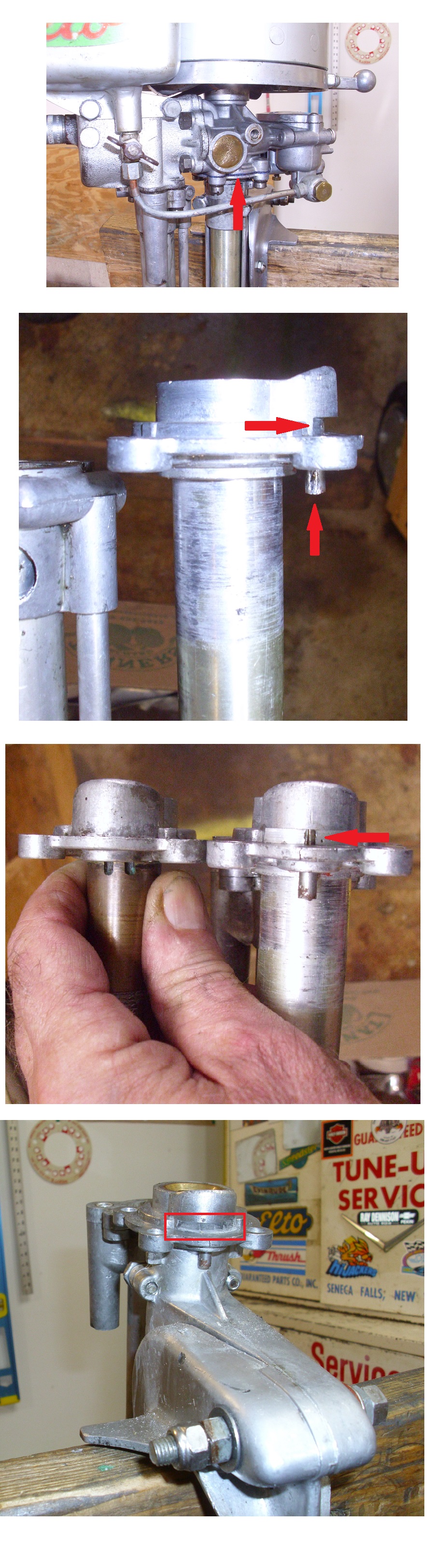
Since I have all this stuff out and its a lousy day
I thought it a good time to explained how this
flange becomes loose so those who run these
regularly can avoid this damage as there is no
repair and its a common problem making a good
replacement hard to come by.A "Boathouse Repair" is one thats done without having tools or the skills to do it properly.
-
AuthorPosts

- You must be logged in to reply to this topic.